
How do you know an HVAC system has reached the end where repairs stop making sense? In Cranston, RI, the warning signs usually show up together: a compressor pulling more amps every summer, a heat exchanger flagged during the last inspection, repeated refrigerant top-offs on an R-22 or early R-410A system, and utility bills rising while comfort drops. Our test is straightforward. If a repair costs a meaningful share of a replacement and the equipment is past twelve to fifteen years, the fix is likely to buy months rather than years, and the money goes into technology a generation behind today's SEER2 and AFUE standards.
Our two most requested repairs are AC Repair and Furnace Repair. That's the place to start if you need a fix today.
Warning Signs for HVAC Replacement
Catching these issues early helps you avoid costly problems. Keep an eye out for the following clues:
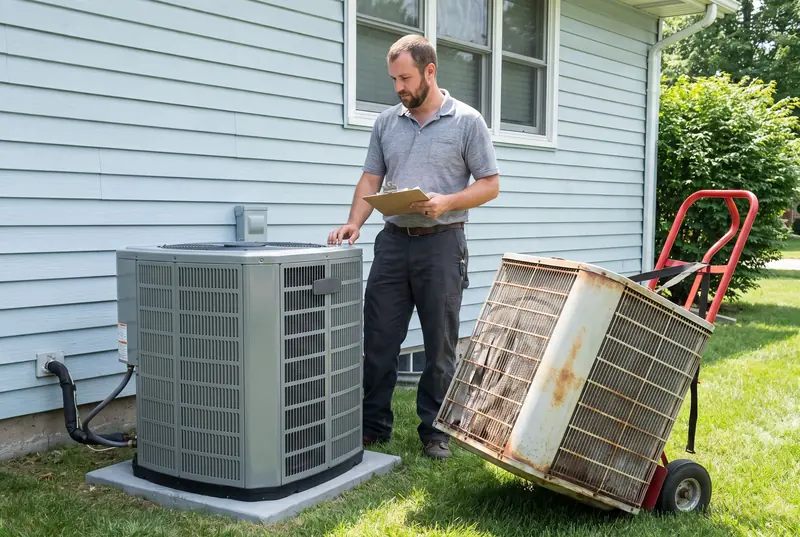
- Visible rust, soot, or corrosion spreading on the cabinet or coils
- An aging system, twelve to fifteen years or more, with problems piling up
- Hot rooms, cold floors, and sticky air the old system never fixes
- Service calls getting more frequent and more expensive
- The equipment is loud enough that you notice every cycle
- Higher energy bills year after year with no obvious explanation
- A major compressor or heat exchanger problem on an older system
- The system runs R-22 or leaks refrigerant faster than top-offs make sense
Act Before It Gets Worse
A failing capacitor, clogged condensate drain, or dirty flame sensor rarely fixes itself and usually gets more expensive to address the longer it runs. At the first hint of a problem, call (401) 204-0642 for a fast inspection.